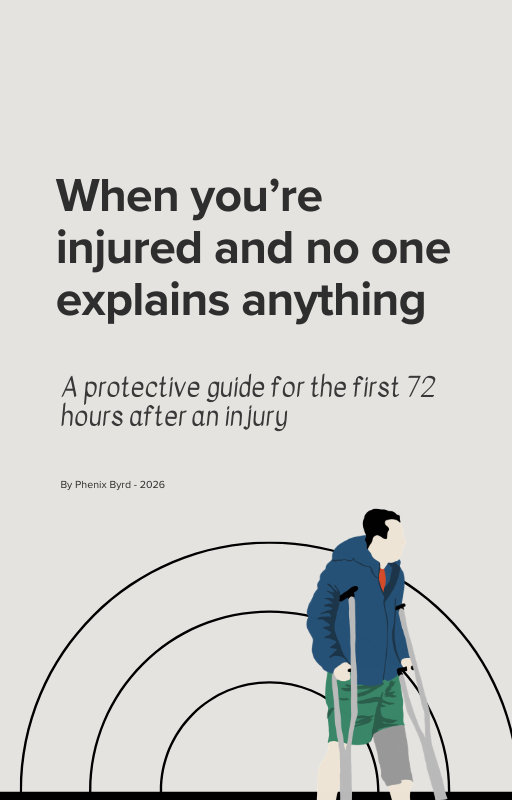
When pain isn’t the only problem…

After an injury, the hardest part often isn’t the pain — it’s the confusion.
Details blur. Instructions pile up. Symptoms change before you can describe them clearly.

This guide was created to help you slow things down, capture what matters, and document your experience while it’s still clear — especially in the critical first days.

✔ Track pain patterns and symptom changes over time
✔ Document functional limitations before adaptation masks them
✔ Record medications, side effects, and responses accurately
✔ Prepare clear, consistent notes for appointments
✔ Keep a reliable record of what you experienced — and when

Inside the injury guide

First-72-hours guidance and grounding instructions

Daily symptom and baseline tracking pages

Functional impact and activity limitation logs

Medication and treatment tracking pages

Appointment preparation and follow-up notes

Open notes pages for additional details

Designed to be used immediately, without overthinking or medical jargon.

A closer look at what's inside

These sample pages show how the guide is structured to support clear, consistent documentation during the first days after an injury.

Daily Pain and Symptom Log

Designed to capture symptoms before they change or fade.

Work and Life Impact Log

Documents how symptoms affect daily activities and responsibilities.

Preparing for Follow-Up Appointments

Helps organize notes and questions before medical visits.

Simple. Immediate. Structured.

Use the journal as soon as you’re able.
Print it or use it digitally.
Bring it with you to appointments.

No pressure to write perfectly — just record what’s real, while it’s still fresh.

Who this guide is meant to support

People dealing with a recent injury or accident

Anyone navigating early recovery or medical uncertainty

Individuals preparing for follow-ups, referrals, or documentation

Caregivers helping someone track symptoms and appointments

Why this guide exists

This guide was created after navigating a serious neck injury that required multiple appointments and careful follow-up.

In the first days, information moved quickly and symptoms evolved. It became clear how easily important details could blur — not because they weren’t significant, but because recovery changes perception.

There wasn’t a structured, printable way to document those early days.

This guide was designed to provide that structure — calmly and clearly — so nothing important gets lost in the confusion.

Frequently asked questions

Q: What format is this in?
A: This is a downloadable PDF you can print or use digitally.

Q: Is this medical advice?
A: No. This journal is for documentation and personal record-keeping only. It does not provide medical or legal advice.

Q: How soon should I start using it?
A: As soon as possible after an injury, especially within the first 72 hours.

Q: Can I use this for ongoing recovery?
A: Yes. While it’s designed for early documentation, many people continue using it during follow-ups.

Q: How do I receive the file?
A: You’ll receive instant access after purchase.

Q: Can I print this at home?
A: Yes. This guide is designed to be printer-friendly, with a clean black-and-white layout that won’t require excessive ink.

Be prepared — even when everything feels overwhelming.

For organizational and documentation purposes only. This guide does not diagnose, treat, or replace professional medical or legal care.